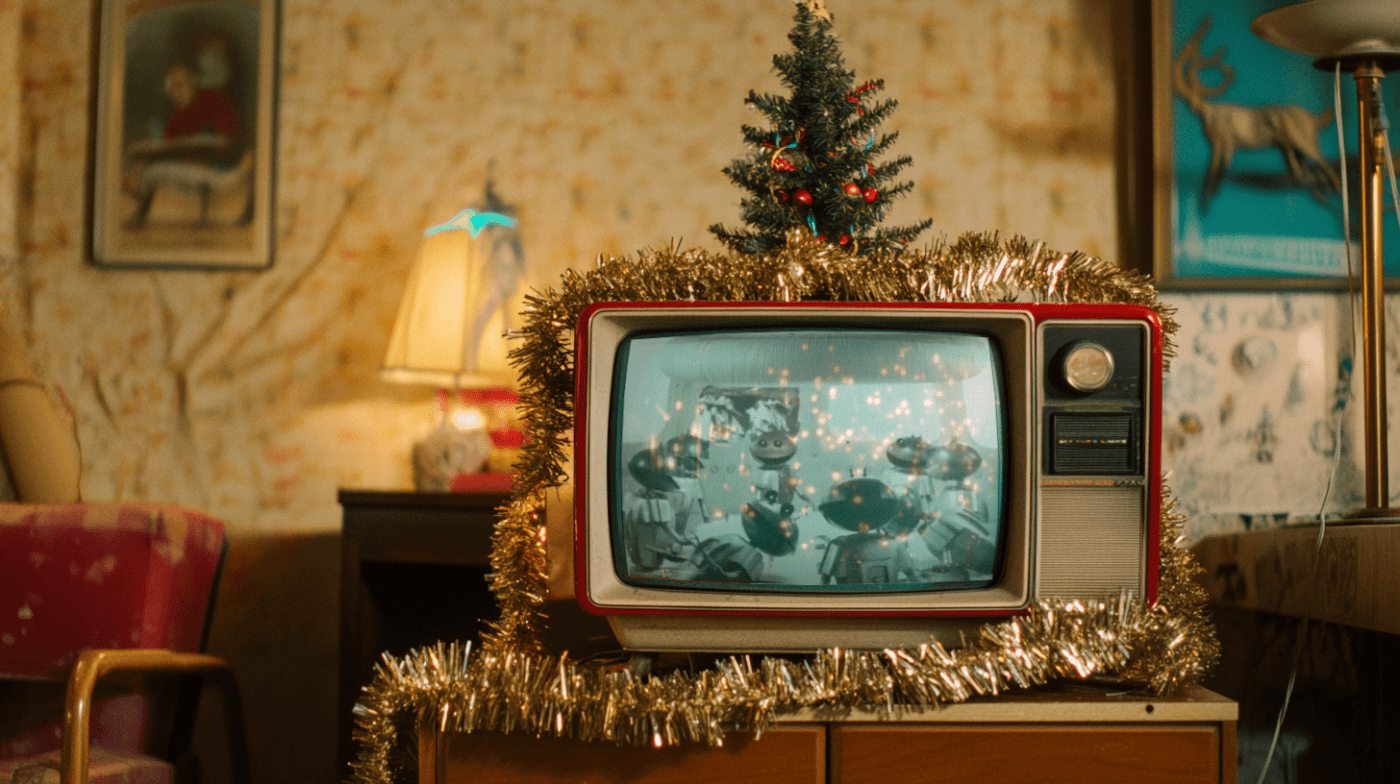
These days I meet quite a few young people who say they ‘don’t watch TV’. Mainly because they don’t own a TV.
We all know, or are told, that the media landscape has changed so much over the last few years that our advertising jobs are unrecognisable from twenty years ago.
In some ways, yes, in others not so much.
When they say ‘they don’t watch TV’ what they really mean is they don’t watch terrestrial channels, the ‘news’ or ‘Strictly’ or ‘Good morning Britain’ like any civilised person. You know, the kind of show us GenXers watch while we’re doing other things.
But they do watch Netflix (presumably while chilling) or prime or Apple TV and the like, or even reels on insta and TikTok, just on the screen of their choice.
And that’s ok, obviously, culture shifts with each generation. My mother, who grew up in the 30s and 40s, used to love her radio. It was her medium of choice.
Chatting with musical interludes? what’s not to like? these days your average Gen Z would think the ‘wireless’ (as my mother called it) a very antiquated device. But exactly what my mother enjoyed about the wireless, people talking about nonsense, crime thrillers or real issues, is still enjoyed by today’s generation.
It’s just called a podcast these days.
When I was a nipper, TV was king. The big TV shows, on a choice of only three channels, could regularly draw in 20 million viewers. Almost as much as a viral video on TikTok these days, or at best a huge sporting event.
And the ads were part of the deal, as they are now of course, but in those days the deal was that they were part of the entertainment not some sort of legal transaction or a bland visual filler. ( although there was always some of that)
Yes, those three channels ran all the ‘content’ available to us outside of the local cinema, (not literally) but crammed in between the Generation game or Coronation Street were hundreds of mini-dramas in bite-sized 30′ chunks. (sound familiar?)
People used to say the ads were better than the shows. (Prizes if you can guess the brand just by my description) so allowing for analogue production values and late 20th century sexism:
We had bears who had left the woods to seek the bright lights of the city. We had straws that would steal your milk. We had crafty old men who would do anything to find themselves in the pub with a pint. We had people who soothed their bruised egos from unfortunate failures, with a mild cigar. We had Germans who beat other drivers to their holiday house, gorgeous young men who undressed in laundromats and helicopters who carried huge golden boxes across deserts. We had families who got together for mealtimes as we watched them grow up. We had Chimps who loved tea, we had aliens who laughed at our potatoes, we had Swiss finishing schools for young ladies. We had songs that everyone would sing from the hilltops that became hits in real life. There were tongue-twisters that became a lipsmackin part of the language and we had inscrutable strap-lines that were both Vorsprung, durch and Technik.
We even had secret agents delivering chocolates to their lady-friends.
And that was just the UK.
(Okay, to be fair it was the 70s and 80s so these were mainly white men in jeans drinking beer).
My point is, we didn’t have a gazillion cable channels or TikTok or Instagram, but we still had the entertainment factor, very similar to the quick dopamine hit of today’s social media scrolling, in every ad break. Yes, it did mean that media-wise every ad was a broad stroke demographically speaking- but who cared? your brand got famous with the whole country.
But even that brand-fame still happens on chosen occasions.
These days there’s this weird throwback to the 70s and 80s where TV spots get talked about on the news (if you watch the news) and go viral across social media.
Twice a year.
In the Uk, it’s usually the big retailer’s Christmas ad that gets people talking. Everyone waits for the John Lewis ad to signal the start of the Christmas season and to dig out the fairy lights. In the US, marketers plan the yearly event of a creating a ‘superbowl’ ad as if this ad is the only opportunity during the year they can harness the power of creativity.
Creatives can hardly contain themselves with excitement at the chance of creating something people will talk about the next day rather than ignore. Clients suddenly throw caution to the wind and delight in their agencies chance to capture the public’s attention.
Nobody would fast-forward through the superbowl ad breaks I am sure (even if they could), because everyone knows these spots are part of the ‘entertainment’.
But imagine if marketers, creatives and agencies and TV watching audiences alike all just agreed that ad breaks could be like that every day. Like in the 70s or 80s. (or even the 90s!)
You mean you could run a ‘superbowl ad’ in normal TV scheduling! who knew??
You would get the talent back into agencies, you would retain and enhance a medium that, when used well, is still the best mass-market way to make a brand famous. And all without designing a new tech product, creating a new country full of litter or making a pop-up shop.
Nothing is stopping anyone from creating spots all year that people talk about the next day, bar a few pesky regulations and an over abundance of caution.
You don’t have to wait for Christmas or the Superbowl.
The French have a saying: Plus ça change, plus c’est la même chose which roughly translated means ‘The more things change, the more they stay the same’.
In other words yes, the media landscape may shift and reinvent and look very different from 40 years ago and personally I love social media and the new brand activations style of thinking, but all this really proves is that creativity still works.
Even on the other 363 days of the year that it isn’t the superbowl or Christmas.
 ollycaporn's blag
What do you think about this blog? Leave a comment!