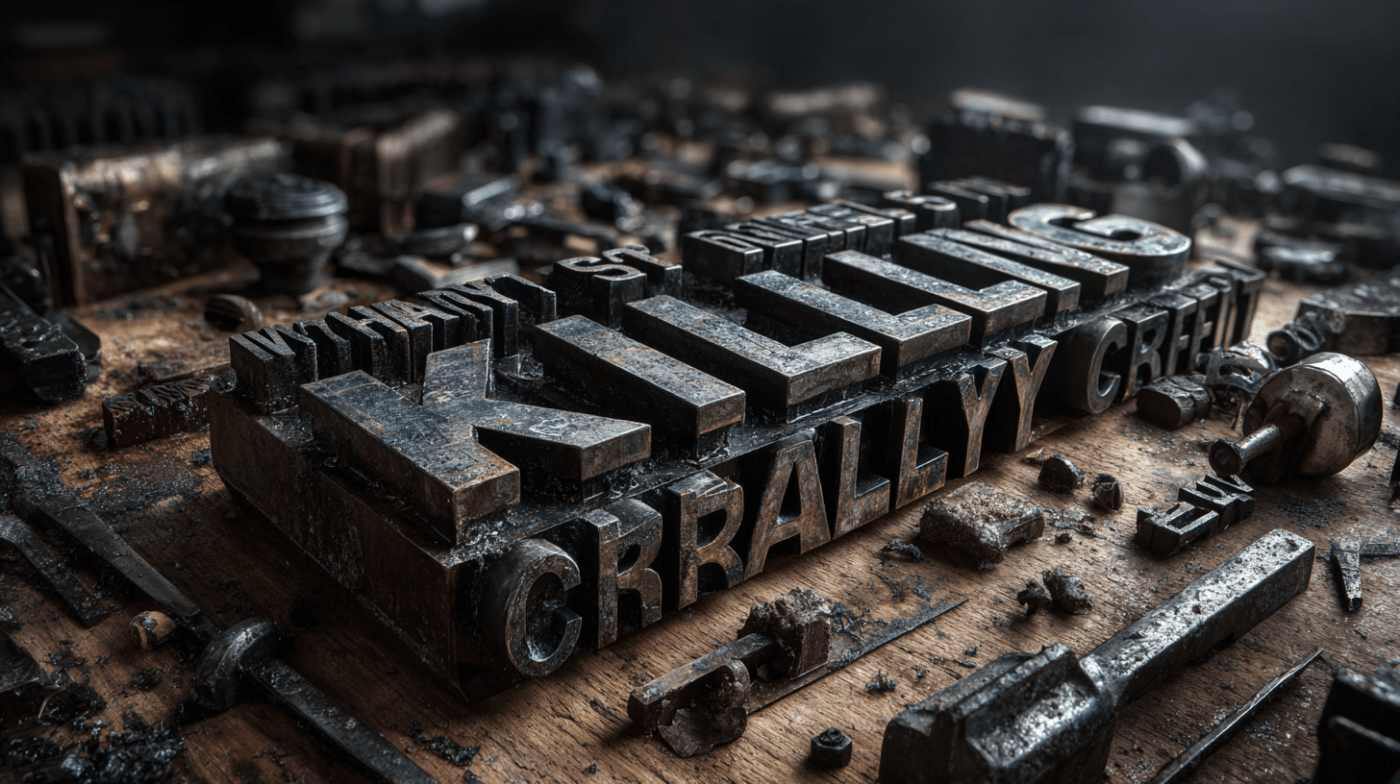
Or as AI would have it, “WHAT IS DIESEL KILLLING CRALLYY GREED?
GROOD QUESTION.
These days it seems that, at every turn, there are new developments that make maintaining a certain level of that elusive pixie-dust, harder and harder. I think it’s a combination of things, new tech, maybe budgets, maybe a lack of old school learning on the job, the loss of senior creative talent to educate the youngsters, creative revolutions, shorter timelines and God knows what else.
Yes, this could sound like it’s shaping up to be a good old whinge, mainly because it probably is. So let’s see where this takes us as we break it down.
In no particular order …
Take pitches, usually they are the time when we can spread our creative wings and show-off a bit in the design dept.
Well, they used to be. Now it’s a question of being handed a set of guidelines and having to make the best of it. Don’t mind a guideline to be fair, makes life easier, less time looking for inspiration more time just getting on with it, but wait…
When I started, there were type directors that would seek out hand-crafted cuts of certain faces, they would pour over leading and letter spacing – they would know how to properly set faces inspired by Roman monument inscriptions or the London underground signage (*Guess the designer). They knew the history and provenance of every font they used, and it showed. Because every font has a tone of voice, and was applied to embellish and compliment the creative idea. It was a corner of the creative department that specialised in this important element of design.
‘Sorry, but that weird face you found in a type book you’ve had since the 80s isn’t SEO compatible.’
Typography these days needs to be ‘accessible’. Which is all well and good, we want everyone to be able to read our copy but take a look through the last thirty years of D&AD or ONE SHOW annuals and you’d probably rule out 90% of it as unusable.
Specialist photography is another disappearing department, clinging on by their light meters are the specialist still-life photographers or landscape or people photographers.
These days if you want to make a living, you have to be able to do lifestyle, still life, portrait, landscape, special effects and be a director and videographer and a retoucher too.
There used to be someone in every agency called an ‘Art Buyer’ whose specific job was to seek out new talent, keeping abreast of who was out there, and recommend the right photographer for the job and then manage the quotes and the project.
But they have generally been seen as a luxury not a necessity. So bye bye Art Buyers. ( let me know if you know of any still practising)
Who’d be an illustrator now? with AI able to pump out any style in a matter of seconds. Every time I see an illustration used in healthcare it feels like the same illustrator is doing everything. Small head, big body, flat 2D format. If you can imagine the illustration by my simple description, that’s proof enough.
All this progress, most of which as made our lives considerably easier and the product be produced faster, have been made with the best intentions. To create better value for clients.
So why the whinge?
Brand guidelines ensure consistency of design around the world, photographers being able to take on all the production from stills to film ensures a consistent look and feel is just easier to coordinate. AI can shorten the time length of creative ideation (I hate that word but have given in to it in the face of overwhelming global usage) and now voice-overs can be selected and pumped out via Eleven labs with the help of Chat GPT to direct the intonation via prompts, in a matter of minutes.
To be clear, I find the AI revolution every bit as exciting as the previous ones. But I have witnessed how each revolution has steadily chipped away at our craft while we all sat by and watched, while eagerly downloading the next cool software.
It’s a little like democracy, we all take voting for granted until the people we vote in don’t care about the process and put troops on the street to keep us quiet.
A little bit of an extreme comparison maybe.
But when Quark came along in the early nineties, it was the first time we could see what the ad would look like in colour. No more guessing with photography and typography before it was proofed, it was a game changer. It cut the time in half.
I remember our old typo at Euros grumbling that ‘art directors don’t know how to set type’ – and of course he was right. But somehow it just became the norm.
When the internet came along and suddenly everyone wanted targeted digital banners, it was a game changer. They could be done so much quicker than print and could be adapted iteratively. And the quality of imagery was arbitrary.
When CGI blossomed it was a game changer. Certainly for old school model makers. Computers could create and render life-like images in half the time of paper-mache and glue. But software can’t replace artistry and how many genius model makers were left out of the new revolution?
Somehow along the way, the exquisite, the delicate, the original, the bombastic, has been pushed aside at the alter of speed.
I don’t know about you and your agency, and it might just be a pharmaland thing, but it can’t be just my experience. We used to get three weeks on a brief, today we have three or four days. 24hrs before first review. Creatives have to hit the ground running- no time for research or factory visits, they want ideas!
And timesheets, although a necessary evil, have played their part. I’ll leave it at that.
But…
When someone asks me ‘is 40 hours enough for this project’, I honestly have no idea. Maybe it will take 16. Maybe 200. If I haven’t cracked it in 40, do you want to present that work? un-cracked but on budget?
I’m not saying that craft has vanished altogether. It’s still there if you know where to find it. Some practitioners in our industry laugh in the face of guidelines and manage to craft great work. Long may they do so.
But in general, if we carry on down this road, clients will all be shopping for creative talent from the same store. Like a factory-made whicker chair versus a hand-made one? A bespoke tailored suit versus an off-the-shelf one?
Yes they’re cheaper, faster made and reasonable quality. But is that the goal?
So does design really matter? who notices the crappy photo or the dodgy letter spacing?
Steve Jobs famously said ‘Design isn’t just about how something looks, it’s about how it works’ and that’s true about advertising design as it is about an iphone. Every decision that is made should be in service of the idea, so long as the idea does what is intended.
So much money, time and effort goes into strategy, research, brand-workshops and the whole bloody process so why short change the work that results from it?
So yes, let us embrace AI, with all its futuristic implications. But don’t lose sight of its purpose. It should help us deliver the best work not be a substitute for thinking or craft.
Otherwise the bean counters will have won, but our clients will have lost.
 ollycaporn's blag
What do you think about this blog? Leave a comment!